
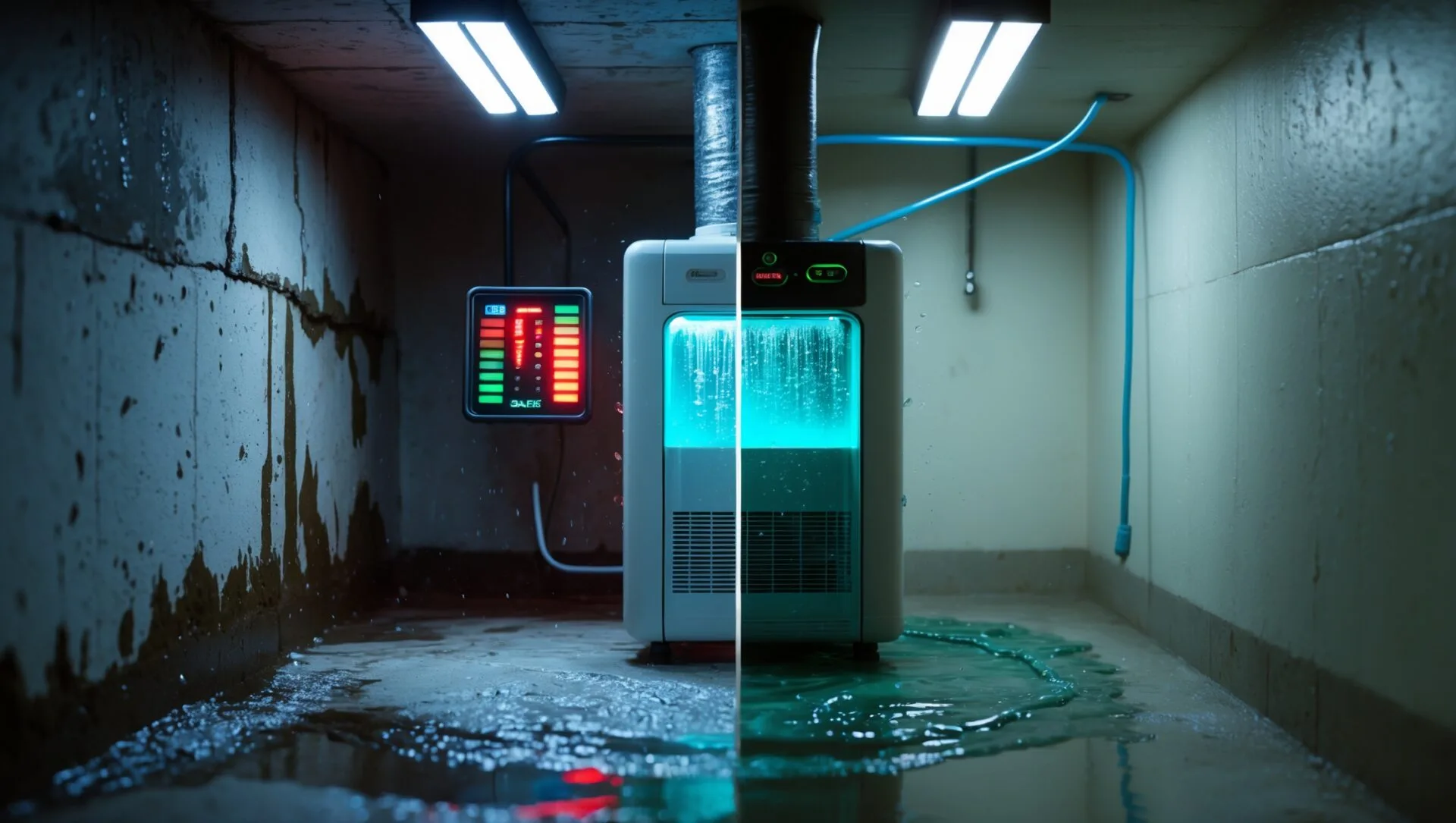
Basements often feel damper than upper floors because they’re cooler, closer to the ground, and exposed to moisture through foundations and air leakage. Basement dehumidification ideas should therefore combine moisture removal with drainage, air sealing, and source control.
A dehumidifier can manage water vapor in the air. It cannot repair a wall, pipe, or drainage system that is actively bringing water inside.
Check for Bulk Water Before Buying Equipment
Look for foundation seepage, plumbing leaks, damp wall sections, wet flooring, clogged exterior drainage, or water collecting near the foundation. Any visible water source deserves attention before relying on dehumidification.
After storms, inspect the basement again. Some moisture problems appear only during heavy rain or changing groundwater conditions.
Pay Attention to Musty Zones
Corners behind stored items and furniture can remain cooler and receive less airflow. Leave some space around exterior walls so surfaces are easier to inspect and dry.
Choose a Dehumidifier for the Actual Space
Portable units are useful for many basements, especially where moisture is moderate and the floor plan is open. Closed storage rooms and separated finished areas may require better circulation or more than one treatment zone.
Basement finishing ideas from room design references can help create comfortable spaces while keeping equipment clear of furniture and accessible for cleaning.
Continuous drainage is often more convenient than repeatedly emptying a collection bucket.
Improve Air Movement Around the Basement
A dehumidifier works best when moist room air can reach it. Interior doors, storage shelving, partition walls, and large furnishings can all restrict circulation.
When adjusting basement zones, practical layout ideas can provide planning inspiration while vents, returns, and dehumidifier intakes remain unobstructed.
| Basement Problem | First Thing to Check | Possible Response |
|---|---|---|
| Wet wall after rain | Exterior drainage | Correct water entry |
| Damp closed room | Weak circulation | Improve air movement |
| Full water bucket daily | High moisture load | Add continuous drain |
| Musty stored items | Cold stagnant corner | Create clearance |
Coordinate Dehumidification With HVAC
Finished basements connected to central heating and cooling may already receive some conditioning, but airflow can still be uneven. Supply and return placement influences whether damp air reaches conditioned parts of the system.
Homeowners gathering lower-level living ideas should keep mechanical access, return-air paths, and service clearances in the plan instead of concealing everything behind built-ins.
In some homes, a ducted whole-house dehumidifier can serve both basement and living areas.
Where Basement Moisture Control Can Fail
One common error is buying a larger dehumidifier while ignoring liquid water entering through the structure. That can increase electricity use without addressing the real source.
Sealing every opening without understanding drainage can also cause problems. Foundations need a complete moisture strategy involving exterior water management, indoor drainage where necessary, and suitable materials. Dehumidification is one part of that system, not a replacement for it.
Frequently Asked Questions
Why is my basement humid in summer?
Warm outdoor air can carry significant moisture. When it reaches cooler basement surfaces, relative humidity rises and condensation may develop on cold materials.
Can one dehumidifier handle an entire basement?
It may in an open basement with good air circulation. Divided rooms, closed doors, or high moisture loads can limit how effectively one unit treats the whole area.
Should basement windows be opened for drying?
Only when outdoor air is actually drier in practical terms. During humid summer weather, opening windows can bring additional moisture into a cool basement.
Dry the Basement From the Source Outward
Start by keeping rainwater and plumbing leaks out of the structure, then improve circulation and use dehumidification to manage the remaining moisture load. Equipment performs better when it isn’t fighting an unresolved water problem. Persistent wet walls, flooring, or recurring seepage should be investigated before cosmetic basement finishing covers the evidence.