
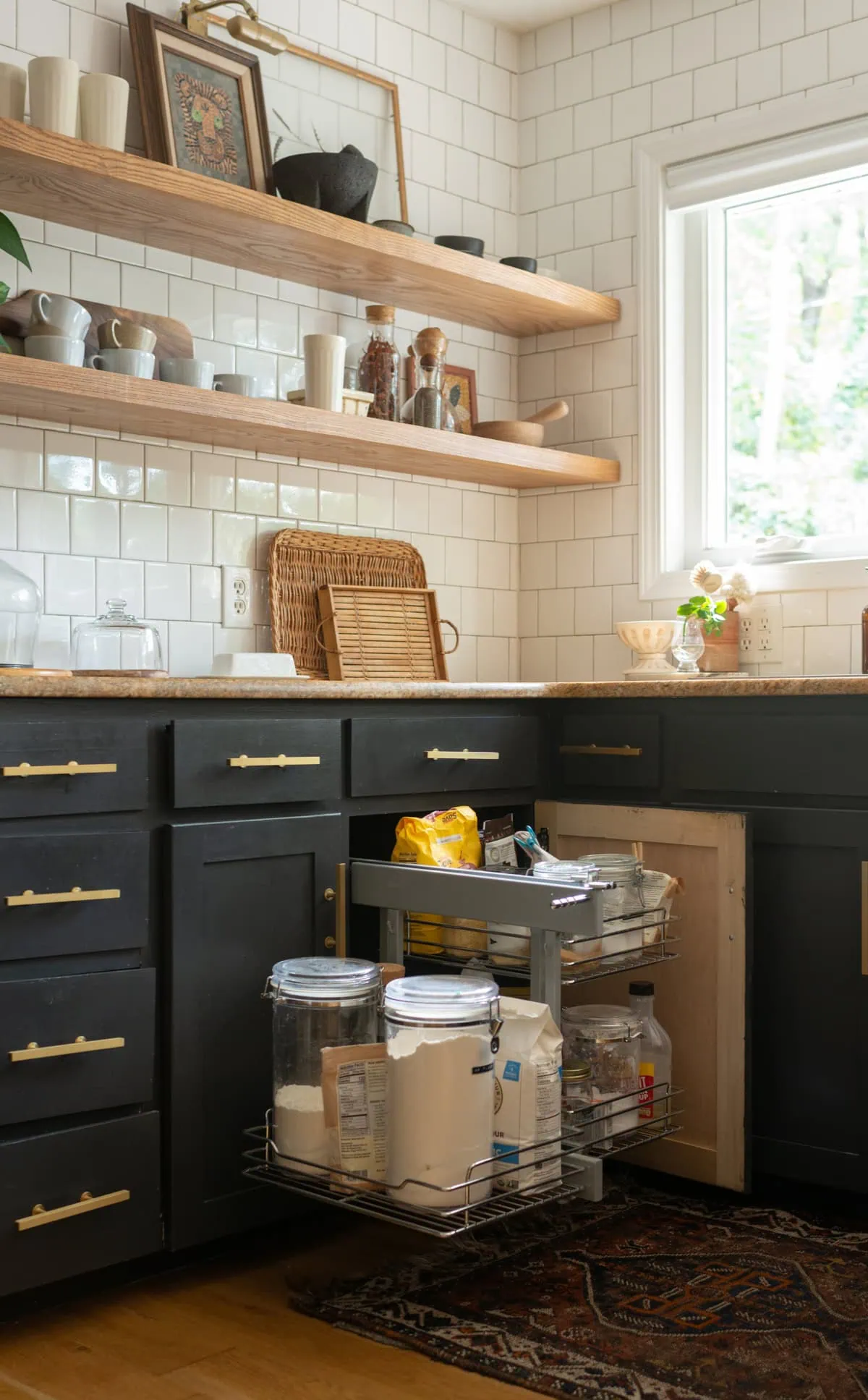
Kitchen corners often create storage that looks generous from the outside but is awkward once the cabinet door opens. Corner drawer ideas approach that space differently. Instead of reaching into a deep diagonal cabinet, the storage moves outward, allowing utensils, cookware, food containers, or supplies to occupy areas that might otherwise remain difficult to reach.
Understand the Shape Before Planning Storage
Corner drawers aren’t shaped like conventional rectangular drawers. Many use angled or segmented boxes that follow the meeting point between two cabinet runs.
That unusual geometry makes measurements important. Pipes, hinges, neighboring handles, and appliance clearances can all affect whether a corner drawer opens fully.
Use the Widest Section Intentionally
The broad center portion is often better for larger objects, while narrower angled areas suit smaller tools and supplies. Matching item size to drawer geometry prevents odd corners from being wasted.
Avoid forcing rectangular organizers into spaces they weren’t designed to fit.
Divide the Drawer Around Its Angles
Custom inserts can turn triangular or irregular sections into practical compartments. Cabinet planning inspiration may provide broader ideas, but the divider layout should follow the real drawer shape rather than trying to disguise it.
Utensils, wraps, trivets, and small kitchen tools can fit well in narrower zones. Larger bowls or pans usually need the central portion.
Check Clearances Before Adding Features
A corner drawer must clear neighboring drawers, handles, cabinet doors, and appliances throughout its full travel. Space-conscious design references may suggest appealing configurations, but physical clearance determines whether they can work in a particular kitchen.
Test opening paths before ordering organizers or adding projecting hardware.
| Corner Area | Suitable Storage | Reason |
|---|---|---|
| Wide center | Bowls or cookware | Uses maximum depth |
| Angled sides | Utensils | Fits narrow geometry |
| Shallow rear area | Flat accessories | Uses limited height |
| Small pockets | Clips or tools | Prevents dead space |
A few inches of clearance can matter more than gaining one extra compartment.
Keep Everyday Items Within Easy Reach
One advantage of drawers is that stored items move toward you. That benefit disappears if frequently used objects are buried in the deepest angled section.
Looking at household layout inspiration can encourage creative placement, but frequency should determine priority. Keep daily tools in obvious zones and reserve awkward pockets for lighter, less frequently used accessories.
Labels aren’t usually necessary if each compartment has a clear purpose. Consistent placement tends to be easier to maintain than elaborate categorization.
Common Corner Drawer Planning Mistakes
Trying to use every cubic inch can produce a drawer that’s technically full but unpleasant to operate. Overly tight organizers may interfere with angled sides, while tall objects can catch the cabinet frame during movement.
Another mistake is ignoring neighboring hardware. Two drawers that look independent may collide if both open toward the same corner. Mock up the movement first, especially during a remodel. Useful corner storage depends as much on clear motion as it does on interior capacity.
Frequently Asked Questions
Are corner drawers more useful than a standard corner cabinet?
They can provide easier access because contents come out toward the user. Standard corner cabinets may offer more continuous volume, so the better choice depends on what you plan to store and how much reach matters.
What should be stored in the narrow sides of corner drawers?
Small utensils, trivets, clips, measuring tools, and other compact objects often fit well. Avoid placing bulky items in areas where their shape prevents smooth opening.
Can corner drawer organizers be customized?
Yes. Custom wood inserts, adjustable dividers, and fitted trays can be designed around unusual angles. Accurate interior measurements are important because standard rectangular organizers may leave large gaps.
Design for Movement, Not Maximum Filling
A good corner drawer turns a difficult angle into storage you can actually reach. Prioritize clean opening paths, useful central space, and compartments shaped around the drawer itself. Leaving one awkward pocket partly open is often better than forcing in an organizer that makes the entire drawer harder to use.