
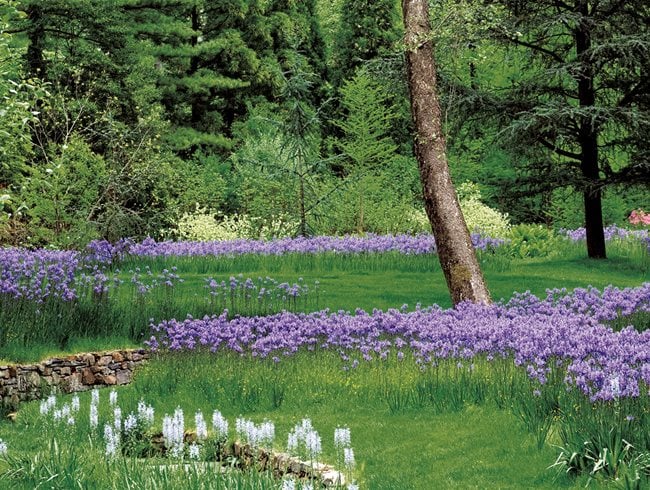
A naturally low area doesn’t always need to be filled or drained immediately. In the right setting, it can become a rain garden that temporarily receives runoff and allows water to soak into the soil while supporting attractive planting.
Successful rain garden ideas depend on choosing the right location, shaping the basin carefully, and using plants that tolerate changing moisture levels.
Choose a Low Spot That Can Safely Receive Water
A rain garden should collect runoff without threatening a building, septic area, retaining structure, or neighboring property. Existing depressions may be useful starting points, but they still need evaluation.
Watch the site after rainfall. Notice how long water remains and whether runoff arrives gradually or rushes into the area.
Direct Water Into the Basin Carefully
Roof downspouts, shallow channels, or graded lawn can guide water toward the garden. The entry point may need stone or dense vegetation to reduce erosion if flow arrives quickly.
A broad basin generally distributes water better than a narrow deep hole.
Build Layers of Plants Around Moisture Zones
Conditions inside a rain garden vary. The center may stay damp longer, while the upper edges dry sooner after a storm.
Outdoor homeowners browsing outdoor drainage inspiration may find that water-focused landscapes are most successful when practical movement of runoff is considered alongside appearance.
Place moisture-tolerant plants in the lowest zone and species comfortable with drier conditions closer to the perimeter.
| Garden Zone | Typical Moisture | Planting Approach |
|---|---|---|
| Basin center | Wettest after rain | Moisture-tolerant plants |
| Mid-slope | Periodically damp | Flexible species |
| Upper edge | Dries sooner | Drier-site plants |
| Inlet | Faster water | Strong roots or stone |
Make the Garden Look Intentional
A rain garden doesn’t need to resemble a drainage basin. Repeating plant groups, defining the outer shape, and using a limited material palette can make it feel like a normal landscape bed.
Ideas from garden living ideas may help with the visual side of planting composition, seating relationships, and natural textures without changing the garden’s drainage purpose.
Keep dense growth from completely hiding the inlet and overflow route.
Include a Safe Overflow Route
A rain garden has limited capacity. During a larger storm, excess water needs somewhere to go after the basin fills.
Thinking about yard improvement considerations before installing nearby fences, patios, sheds, or edging can prevent future obstacles from blocking that overflow path.
The overflow should move water toward a safe location without causing erosion or transferring the drainage problem downhill.
Common Rain Garden Misunderstandings
A rain garden isn’t simply a permanently wet garden. If water remains for long periods, soil conditions or basin design may not match the intended use.
Plant choice is another common problem. Selecting only plants that love constant moisture can fail because the basin may become dry between storms. Digging too deeply can also create a pond-like depression rather than a shallow infiltration area.
Design for changing conditions, not one permanent moisture level.
Frequently Asked Questions
Can a rain garden handle roof runoff?
Yes, roof runoff is commonly directed toward suitable rain gardens, provided the basin is appropriately located and sized for the site. The inlet and overflow route need to be considered as part of the design.
Does a rain garden attract mosquitoes?
A properly functioning rain garden is intended to drain between rainfall events rather than remain permanently flooded. Long-lasting standing water suggests the site or design may need adjustment.
What plants work best in a rain garden?
Plants should match the moisture zone, local climate, sunlight, and soil. Species that tolerate periodic wetness followed by drier conditions are often more useful than plants requiring constantly saturated soil.
Turn the Low Spot Into an Asset
The best rain garden begins with understanding why the area collects water and where overflow can safely travel. Once those basics work, planting can transform a troublesome depression into a layered garden with seasonal interest. Treat drainage as the structure beneath the design, then let the plants provide the character above it.